
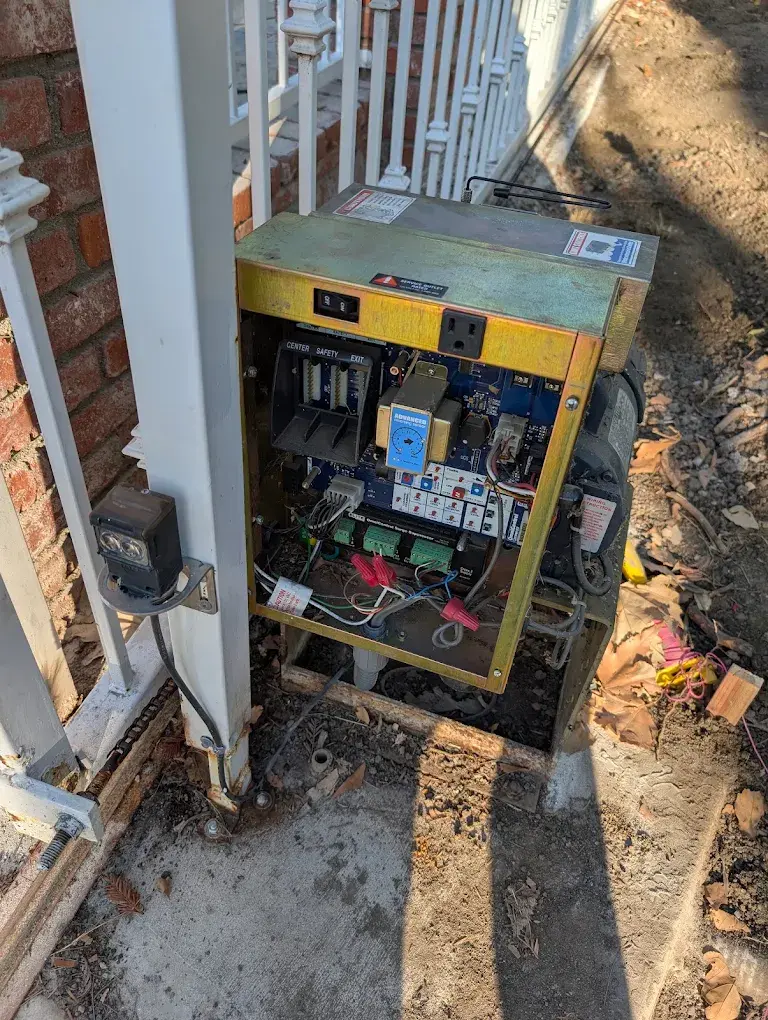
Gate motors rarely fail without warning. In most cases, there are small signs building for weeks before a gate stops working altogether, and catching them early usually means a simple repair instead of a full replacement. Here are the five signs we hear about most often from homeowners across Los Angeles right before a motor gives out. Request a Gate Motor Inspection .
Sign 1: The Gate Moves Noticeably Slower Than Before
A gate that used to open briskly and now creeps along is usually telling you the motor is working harder than it should. This is often caused by worn gears inside the operator, low lubrication, or a track that’s collecting debris and creating resistance. It’s one of the earliest and most reliable signs of a motor heading toward failure.
We see this often in older systems throughout the San Fernando Valley, where heat and dust build up in the track over the dry season. A quick gate operator inspection can usually confirm whether it’s a simple cleaning and lubrication fix or something more serious.
Sign 2: Grinding, Clicking, or Straining Noises
A healthy gate motor runs with a fairly consistent hum. New grinding, clicking, or a straining sound as the gate moves usually points to worn gears, a failing chain, or a motor that’s drawing more current than it should to compensate for mechanical resistance elsewhere in the system.
Ignoring unusual noise is one of the most common ways a manageable repair turns into a full motor replacement, since the underlying issue keeps getting worse every time the gate cycles.
Sign 3: The Gate Stops or Reverses Unexpectedly
If your gate stops partway through its cycle or reverses direction without an obvious obstruction, the issue could be a misaligned safety sensor, a failing limit switch, or a motor that’s overheating and shutting itself down as a protective measure. This is also one of the more urgent signs, since an inconsistent gate can leave your property temporarily unsecured.
Homeowners in coastal areas sometimes notice this behavior increase after storms or high humidity, when moisture affects sensor connections. If your gate has been acting unpredictably, it’s worth having gate repair done sooner rather than later.
Sign 4: The Motor Runs but the Gate Doesn’t Move
This is one of the clearest signs of a serious mechanical problem. If you can hear the motor engage but the gate stays put, the issue is usually a stripped gear, a broken chain or belt, or a slipped drive coupling. At this point, the motor is essentially disconnected from the gate itself, and continuing to run it can cause additional internal damage.
This kind of failure often happens gradually, with the gate briefly hesitating or slipping before it stops moving altogether, which ties back to why catching the earlier signs matters. To understand what commonly leads here, our guide on what causes electric gates to stop working breaks down the most frequent culprits.
| Service Feature | Metro GDS Inc: LA Gate Motor Repair | Typical Competitor |
|---|---|---|
| Diagnosis | ✅ Full inspection before recommending repair or replacement | ❌ Quick guesswork, parts swapped without testing |
| Availability | ✅ 24/7 emergency response | ❌ Limited hours and slow callbacks |
| Pricing | ✅ Upfront quote before work begins | ❌ Hidden fees and repeat visits |
| Reputation | ✅ Perfect 5.0 rating across the web | ❌ Hidden or no customer testimonials |
Sign 5: A Hot Motor Housing or Rising Energy Use
If the motor housing feels noticeably warm after a normal cycle, or you’ve noticed a small uptick in your electric bill without an obvious reason, the operator may be drawing more current than it should. This usually happens when internal components are working harder to overcome friction, misalignment, or a weakening capacitor.
A motor that’s overheating regularly is also more likely to trip a breaker or fail outright during a heat wave, which is exactly when you need reliable access the most. Understanding realistic lifespans can help you decide whether repair still makes sense; our article on how long an automatic gate lasts in Los Angeles is a useful next read if your system is getting older.
If any of this sounds familiar, don’t wait for the gate to fail completely, especially if it’s your only secured entrance. Our gate operator technicians can usually tell within one visit whether you’re looking at a straightforward repair or a full replacement. Schedule Your Diagnostic Visit today.
Frequently Asked Questions
How much does gate motor repair cost in Los Angeles?
Basic repairs like sensor realignment or lubrication are usually the least expensive fixes, while gear, chain, or circuit board issues cost more depending on parts and labor. We provide an upfront quote after diagnosing the actual problem, not before.
Can I repair a gate motor myself?
Basic cleaning, clearing debris from the track, and lubricating hinges are generally safe for homeowners. Anything involving the motor housing, wiring, or drive chain should be handled by a licensed technician, since these components can carry serious force.
How long do gate motors typically last?
Well-maintained gate operators commonly last around 10 to 15 years, though high-usage driveways or units exposed to heavy heat, wind, or salt air can wear out sooner without regular maintenance.
Should I repair or replace an older gate motor?
If the motor is older and repairs are becoming frequent, replacement is often more cost-effective long-term, especially if newer models offer better safety features. A technician can compare repair cost against replacement to help you decide.