
Quick Answer
How do you extend the life of an automatic gate?
Extend an automatic gate's life with routine maintenance: lubricate rollers, hinges, and chains, clean and align photo-eye sensors, tighten hardware, inspect the operator, and address minor repairs promptly. Keeping the gate balanced and free of debris reduces motor strain. Scheduling professional service annually prevents premature failure. Metro GDS maintains and repairs automatic gates across Los Angeles to maximize reliability and lifespan.
In Los Angeles, your automatic gate is the hardest-working component of your home’s exterior. It cycles multiple times a day, opening for your morning commute, for the kids coming home from school, and for delivery drivers dropping off packages. It stands guard 24/7, exposed to the relentless Southern California sun, Santa Ana winds, and seasonal smog.
Despite this heavy workload, most homeowners ignore their gate until it stops working.
Replacing a gate motor or a rusted track is an expensive surprise that can often be avoided. With a little proactive care, you can add years to the lifespan of your system. Here is how to keep your automatic gate running smoothly in the unique conditions of the Greater Los Angeles area.
1. Fight the “LA Grime” (Cleaning Is Key)
Our local climate is dry and dusty. Over time, a layer of grit, smog residue, and brake dust builds up on the moving parts of your gate. This grit acts like sandpaper, slowly grinding down your rollers, hinges, and internal bearings.
The Fix: Once a month, take a few minutes to clean the critical components.
- For Sliding Gates: Sweep the track clear of stones, leaves, and debris. Even a small pebble can derail a heavy gate or force the motor to work double-time, burning it out prematurely. Wipe down the internal track of the gate with a damp cloth to remove built-up black residue.
- For Swing Gates: Wipe down the control arm and the hinge points. If you live near the coast (Santa Monica, Malibu, South Bay), rinse your gate with fresh water monthly to remove salt spray that accelerates rust.
2. Lubrication: The Right Way vs. The Wrong Way
Friction is the enemy of automation. If your gate squeaks or shudders when it moves, the motor is fighting unnecessary resistance. However, a common mistake homeowners make is grabbing a can of WD-40.
Stop! Do not use standard WD-40. It is a solvent, not a long-term lubricant. It actually strips away existing grease and attracts more dust and dirt, creating a sticky sludge that jams components.
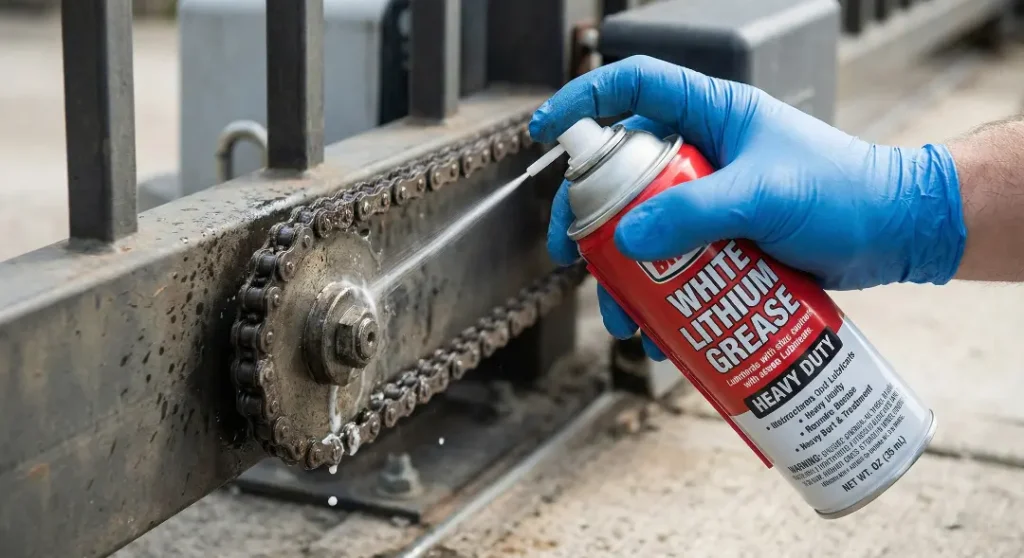
The Fix: Use a high-quality white lithium grease or a silicone-based spray. These repel water and do not attract dust.
- Hinges: Spray the pivot points liberally.
- Chain: If you have a sliding gate with an exposed chain, spray the entire length to prevent rust and keep the links flexible.
- Internal Gears: Note: Internal motor gears should generally be serviced by a professional during an annual tune-up, as opening the motor housing can void your warranty.
3. Pest Patrol: The Hidden Electrical Destroyer
It sounds strange, but insects are a leading cause of gate failure in Los Angeles. Spiders, ants, and lizards love the warm, enclosed space of your gate operator’s control box.
Ants, in particular, are attracted to the electromagnetic field of the circuit boards. They can swarm the board, causing short circuits that fry the expensive motherboard. Slugs and snails can also bridge connections, leading to catastrophic failure.
The Fix: Open your control box cover (carefully!) once a season to check for cobwebs or nests. Gently brush them away. Placing a few mothballs or a dryer sheet inside the housing can help deter pests without damaging the electronics.
4. Care for Your Solar Panels
With the abundance of sunshine in LA, many modern gates run on solar power. These systems are incredibly reliable, but only if they can “see” the sun.
A dirty solar panel can lose up to 30% of its charging efficiency. If your battery isn’t getting a full charge during the day, the gate might struggle to open at night or fail completely during a cloudy week.
The Fix: Treat your solar panel like a window. Wipe it down with a glass cleaner or simple soapy water to remove the layer of dust and pollen. Ensure that nearby trees or bougainvillea haven’t grown over the panel, blocking the direct sunlight.
5. Test Your Safety Sensors (The Photo Eyes)
Modern gates are equipped with photo-eye sensors, those little black boxes near the ground that shoot an invisible beam across the driveway. If this beam is broken, the gate stops.
In Los Angeles, these sensors often get knocked out of alignment by gardeners, stray balls, or even slight shifts in the ground during minor tremors. If your gate opens but refuses to close, or if it reverses direction randomly, it’s usually a sensor issue.
The Fix: Check that the lenses are clean and free of mud or spiderwebs. Look at the LED indicator lights on the sensors; they should be solid, not flickering. If they are flickering, gently adjust the angle until the light stabilizes.
6. The Importance of Professional “Tune-Ups”
While cleaning and lubricating are great DIY tasks, an automatic gate is a complex piece of heavy machinery. Just like your car needs an oil change and a mechanic’s eye, your gate needs professional servicing.
A professional technician can check things you can’t, such as:
- Belt Tension: A loose belt reduces power; a tight belt wears out bearings.
- Electrical Draw: Measuring the amperage to see if the motor is struggling before it fails.
- Safety Compliance: Ensuring the emergency fire access and reverse mechanisms meet current fire codes.
Scheduling a professional maintenance visit once a year is significantly cheaper than paying for an emergency repair when the gate gets stuck shut on a Monday morning.
Keep Your Gate Running Strong
Your automatic gate is an investment in your home’s security and value. Don’t let neglect turn it into a liability.
Metro GDS is the Greater Los Angeles authority on automatic gate maintenance and repair. Whether you need a routine safety inspection, a motor tune-up, or a complete system upgrade, our certified technicians have the expertise to keep your entrance secure and functional.
Don’t wait for a breakdown. Contact us today to schedule your preventative maintenance service.