
Quick Answer
Which lasts longer in Los Angeles, iron gates or aluminum gates?
Iron gates are stronger and more secure and can last for decades, but they require maintenance to prevent rust; aluminum gates resist corrosion naturally and last long with minimal upkeep, making them ideal for coastal LA areas. Iron suits security-focused, high-end designs, while aluminum favors low maintenance and lighter automation. Metro GDS installs and maintains both iron and aluminum gates across Los Angeles, matching material to your climate and priorities.
Choosing the right material for your property’s entryway is a significant investment that balances aesthetics, security, and long-term durability. For homeowners and business owners in Southern California, the decision often boils down to two heavyweights: iron and aluminum. While both offer distinct advantages, the question of which material lasts longer depends on your specific environment, maintenance commitment, and security needs. At Metro GDS, we specialize in high-quality gate installations across Los Angeles, and we understand how our local climate impacts these materials differently over time.

Understanding the Structural Integrity of Wrought Iron
| Feature | Iron Gates | Aluminum Gates |
|---|---|---|
| Strength & Security | Excellent | Good |
| Rust Resistance | Needs coating & upkeep | Naturally rust-proof |
| Best for Coastal LA | Inland areas | Salt air / coast |
| Maintenance | Periodic (sand & repaint) | Minimal |
| Lifespan | Decades with care | Long, low upkeep |
| Automation Fit | Needs heavier motor | Easy — lightweight |
| Typical Cost | $$$ Higher | $$ Moderate |
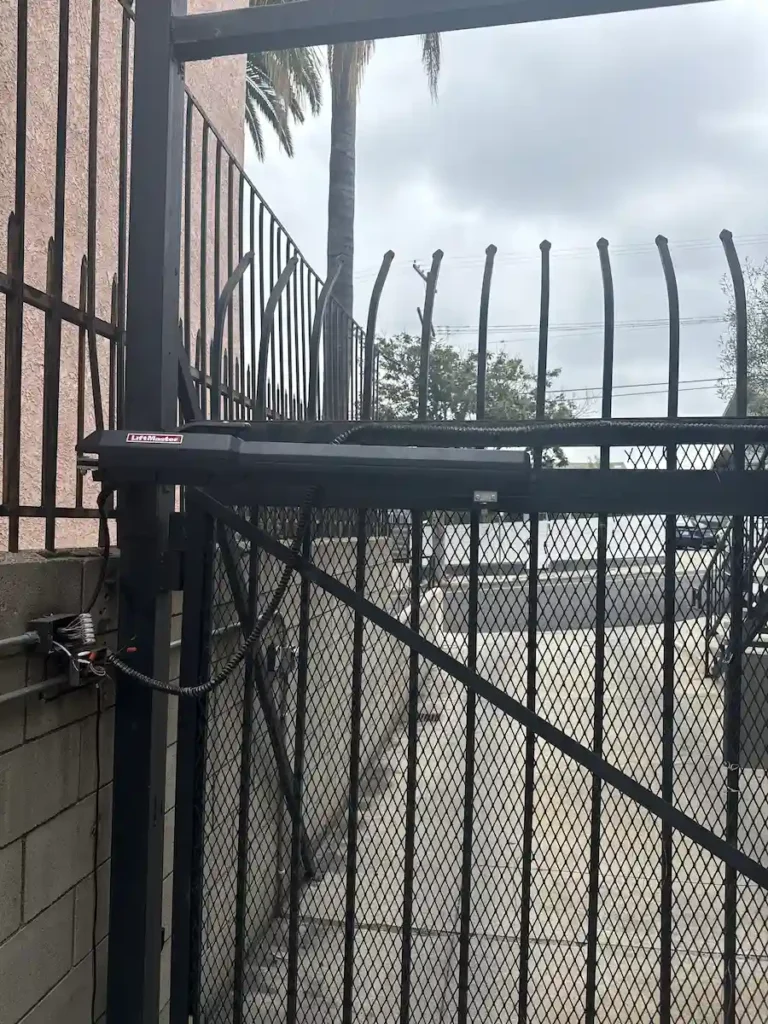
Wrought iron has long been the gold standard for luxury and high-security fencing. Its longevity is legendary; many historic estates feature iron gates that have stood for over a century. The secret to its lifespan lies in its sheer density and tensile strength. Iron is incredibly difficult to break or bend, making it the superior choice for those prioritizing protection. However, iron is a ferrous metal, meaning it contains iron atoms that are susceptible to oxidation when exposed to moisture and oxygen.
In the relatively dry climate of Los Angeles, wrought iron performs exceptionally well, provided it is treated with modern powder coating or specialized anti-rust paints. Without this protection, the salt air in coastal neighborhoods like Santa Monica or Venice can accelerate corrosion. To ensure an iron gate lasts for decades, it requires periodic inspections and touch-ups to prevent “rust creep.” When maintained properly, the structural lifespan of iron is virtually unmatched by any other material.
The Corrosion-Resistant Advantage of Aluminum
Aluminum has surged in popularity because it is naturally resistant to rust and corrosion. Unlike iron, aluminum does not contain carbon steel elements that oxidize into flakey rust. Instead, it forms a microscopic oxide layer that protects the rest of the metal from further decay. This makes aluminum gates an excellent choice for properties located near the ocean or in areas with higher humidity. Because it is a non-ferrous metal, its “lifespan” in terms of resisting environmental decay is technically superior to untreated iron.
However, longevity isn’t just about resisting rust, it’s also about physical wear and tear. Aluminum is a much lighter and softer metal than iron. Over twenty or thirty years, an aluminum gate may be more prone to denting, warping, or sagging if it is a high-traffic entryway. While the metal itself won’t disappear to rust, the structural form may lose its integrity faster than iron if subjected to heavy impact or extreme wind loads.
Comparing Maintenance Cycles and Long-Term Costs

When evaluating which gate lasts longer, one must consider the maintenance required to keep the gate functional. A gate that is neglected will fail prematurely regardless of the material. Iron gates require a more “hands-on” approach. You should expect to sand down and repaint your iron gate every 3 to 5 years depending on environmental exposure. This maintenance prevents the structural degradation that occurs when rust penetrates the core of the metal.
Aluminum gates are often marketed as “maintenance-free.” While they do require significantly less work, usually just a wash with soap and water to remove debris, they are not invincible. The powder coating on aluminum can fade or chalk over time due to the intense California UV rays. Once the finish on an aluminum gate begins to fail, it is much harder to “refurbish” than iron. You can easily weld and repair a section of iron, but repairing damaged aluminum often requires complete component replacement. According to research on metallic corrosion, selecting the right alloy is critical for atmospheric longevity.
Impact of the Los Angeles Climate on Gate Durability
The Southern California environment presents unique challenges for exterior metals. We experience high UV indexes, occasional salt spray, and seismic shifts. Iron’s weight and rigidity make it highly stable during the thermal expansion and contraction caused by our hot days and cool nights. It stays hung and aligned even under stress. Aluminum, being more flexible, can sometimes shift or require hinge adjustments more frequently as the metal expands in the sun.
Furthermore, the U.S. Department of Energy suggests that material choices for home exteriors should account for local weather patterns to maximize the “life cycle” of the product. In our inland valleys, where salt air isn’t a factor, iron can last a lifetime with minimal intervention. In coastal zones, we often recommend high-grade aluminum or specialized galvanized steel to ensure the gate doesn’t succumb to the briny atmosphere.
Security, Weight, and Mechanical Longevity
A gate’s lifespan is also tied to the hardware that moves it. Because iron is significantly heavier, it requires heavy-duty hinges and high-torque gate operators. If you install an iron gate with underpowered motors, the system will fail within a few years. Conversely, aluminum’s lightweight nature puts far less strain on the automation system, often extending the life of the electronic motors and rollers.
If your primary goal is a “forever gate” that provides a physical deterrent against intrusion, iron is the winner. It can withstand impacts that would crumple an aluminum frame. However, if you want a gate that looks pristine with zero effort and you aren’t worried about heavy impacts, aluminum will technically “outlast” iron in a battle against the elements without any human intervention. For more information on structural standards, you can refer to the American Society of Civil Engineers (ASCE) guidelines on material durability.
Final Verdict: Which One Should You Choose?
Ultimately, iron lasts longer structurally, while aluminum lasts longer aesthetically with less work. If you are willing to perform minor maintenance every few years, a wrought iron gate is a multi-generational asset that adds immense value and security to your Los Angeles home. If you prefer a “set it and forget it” solution and live near the coast, aluminum is the practical choice that will resist the salt air for decades. At Metro GDS, we recommend assessing your proximity to the ocean and your security requirements before making the final call. Both materials, when sourced from quality manufacturers and installed by professionals, offer a lifespan that justifies the investment.
Professional Gate Installation in Los Angeles
Enhancing your home’s curb appeal and security starts with choosing a partner who understands the nuances of local craftsmanship and environmental durability. At Metro GDS, we provide expert consultation and precision installation for both iron and aluminum gates, ensuring that whichever material you choose is engineered to stand the test of time in the California sun. Whether you need a custom-forged wrought iron masterpiece or a sleek, modern aluminum entryway, our team is dedicated to delivering results that combine aesthetic beauty with rugged functionality. Don’t leave your property’s first line of defense to chance; contact us today to schedule a consultation and discover the perfect gate solution tailored to your specific needs and location.